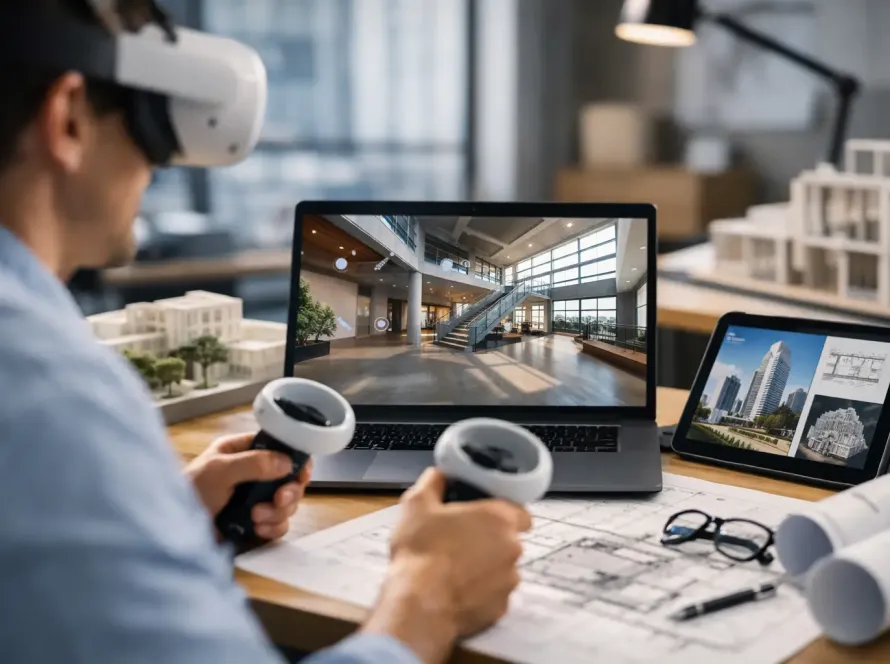
A coordination meeting used to mean someone screen-sharing a model, a few people talking over each other, and a long list of follow-ups buried in email by the end of the day. That version of collaboration is fading. The most significant AEC collaboration trends now are less about adding another communication channel and more about building a connected project environment where models, decisions, files, approvals, and performance data stay visible across the full lifecycle.
For architecture, engineering, and construction teams, that shift matters because project risk rarely comes from one bad model or one missed comment. It comes from fragmentation. Design lives in one tool, RFIs in another, client communication somewhere else, and business reporting in a separate system no one checks until a deadline starts slipping. The firms pulling ahead are reducing those gaps.
Why AEC collaboration trends are moving beyond file sharing
For years, collaboration in AEC was treated as a document problem. If the right people could access the latest drawing set or model, the team was considered connected. That approach still matters, but it no longer covers the actual complexity of digital delivery.
Today, collaboration includes model coordination, structured issue tracking, permission control, analytics, client visibility, and operational context. A BIM manager may need to trace a clash back to a version change in Revit. A contractor may need faster access to current field information without digging through folder trees. A firm owner may want to know which projects are slowing down because approvals are stuck, not because design work is behind. That is a different level of coordination, and it requires more than storage.
This is why platform thinking is gaining ground. Instead of stitching together disconnected apps for each task, firms are looking for systems that can support technical production and business operations in one environment. The benefit is not just convenience. It is better decision speed, clearer accountability, and fewer blind spots between teams.
The AEC collaboration trends that matter most right now
1. Common data environments are becoming operational hubs
The common data environment is no longer just a shared repository. It is becoming the working layer for project activity. Teams want controlled access, version certainty, and structured workflows around approvals, markups, and model exchanges.
The trade-off is that a common data environment only works when standards are actually enforced. If naming conventions, permissions, and review routines are weak, the platform becomes a cleaner-looking mess. Firms seeing the best results are treating the environment as a managed system, not a passive archive.
2. BIM collaboration is expanding into business systems
One of the more important shifts is that BIM data is no longer staying inside the design team. Project intelligence is moving into broader operational workflows such as CRM, analytics, client reporting, and resource planning.
That changes how firms think about collaboration. Instead of asking whether architects and engineers can coordinate geometry, they are asking whether project data can support decisions across departments. Can leadership see delivery risks early? Can account teams track client activity alongside project milestones? Can operations connect workload data with actual model progress? When BIM data becomes part of the business layer, collaboration becomes more strategic.
3. Digital twins are moving from concept to practical use
Digital twins still get overhyped, but the underlying trend is real. Owners and delivery teams increasingly want a connected digital representation of the built asset that continues to provide value after handover.
In practical terms, this pushes collaboration earlier. Design teams need to think about data structure, asset information, and downstream usability from the start. Contractors need to support cleaner information flow during construction. The result is not that every project suddenly becomes a full twin deployment. It is that more projects are being delivered with lifecycle intelligence in mind.
4. Real-time visibility is replacing periodic reporting
Weekly reports and milestone check-ins are still part of project management, but they are no longer enough for fast-moving teams. A growing number of firms want live visibility into issues, status changes, file access, and team activity.
This trend is especially relevant on complex BIM-centric projects where small delays compound quickly. If a coordination issue sits unnoticed for three days, it can affect procurement, documentation, and field planning. Dashboards, alerts, and analytics reduce that lag. The goal is not more noise. The goal is faster signal.
5. Interoperability is becoming a leadership issue, not just a technical one
AEC teams have always dealt with mixed software environments. What is changing is the business cost of poor interoperability. When data has to be manually reformatted, duplicated, or re-entered across systems, the impact reaches beyond the model.
Leadership teams are now paying closer attention because interoperability affects staffing efficiency, project margin, and client experience. If your Revit workflow, Civil 3D data, AutoCAD documentation, and external collaboration tools do not connect cleanly, your team spends more time managing the software stack than moving the project forward. Better integrations are no longer a technical nice-to-have. They are becoming part of digital strategy.
6. Secure collaboration is getting more attention
As project information becomes more centralized and more accessible, security moves closer to the center of collaboration planning. This is not only about protecting files from outside threats. It is also about managing internal permissions, controlling data exposure, and creating confidence for clients and partners.
There is a balance to strike here. Lock everything down too tightly and productivity drops. Open access too broadly and risk increases. The strongest collaboration environments are not just secure. They are structured, with role-based access and clear governance that supports actual work instead of slowing it down.
7. Multidisciplinary collaboration is getting more continuous
The old pattern of discipline-based handoff is weakening. Architects, structural engineers, MEP teams, fabricators, and contractors are being asked to work in tighter cycles with more frequent feedback. That does not mean everyone is in every decision. It means the intervals between decisions are shrinking.
This can improve quality and reduce rework, but only when the workflow supports it. Without clear issue ownership and model governance, constant collaboration turns into constant interruption. Firms need systems that make feedback visible and actionable without turning every task into an all-team event.
What these trends mean for AEC firms
The immediate implication is simple: collaboration is becoming infrastructure. It is no longer a soft layer sitting on top of project delivery. It is part of the delivery system itself.
That has consequences for technology decisions. Firms choosing collaboration tools based only on file exchange or meeting convenience will likely hit limitations fast. The more durable approach is to evaluate how the environment supports the full chain of work – design coordination, data management, communication, reporting, security, and business oversight.
It also changes the role of BIM leadership. BIM managers and digital practice leaders are increasingly expected to influence process architecture, not just model standards. They are helping define how information moves through the firm, how teams interact with project data, and how digital workflows scale without creating more fragmentation.
For firm owners and operations leaders, the question is less about whether collaboration matters and more about whether the current stack can support growth. A disconnected toolset may be tolerable at small scale. It gets expensive fast when project volume rises, teams expand, and clients expect more transparency.
Where teams should focus next
The smartest next step is not to chase every new feature being marketed to the industry. It is to identify where collaboration currently breaks down. For some firms, the biggest problem is uncontrolled file exchange. For others, it is weak visibility across projects, poor integration between BIM and business systems, or a lack of secure external collaboration.
From there, the priority should be building a connected environment that supports both project delivery and operational decision-making. That is where platform-based approaches stand out. When design workflows, analytics, communication, secure transfer, and business tools live in one ecosystem, teams spend less time bridging gaps and more time moving work forward.
This is also where BIMeta fits the direction of the market. AEC teams are looking for more than isolated plugins or single-use apps. They need connected systems that support BIM workflows while extending into collaboration, intelligence, and scalable digital operations.
If your current setup still relies on scattered tools and manual follow-up to keep projects aligned, the trend is clear. The next phase of AEC collaboration is connected, visible, and data-aware. Firms that build for that reality now will be in a stronger position when project complexity, client expectations, and delivery speed continue to rise.
The teams that gain the most from these changes will not be the ones with the most software. They will be the ones that make collaboration measurable, structured, and useful at every stage of the project.