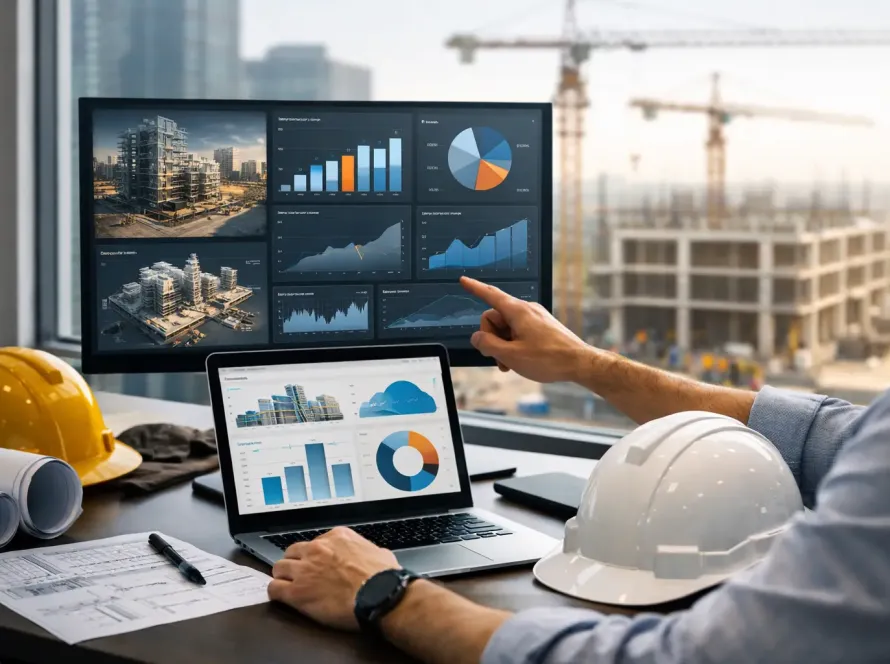
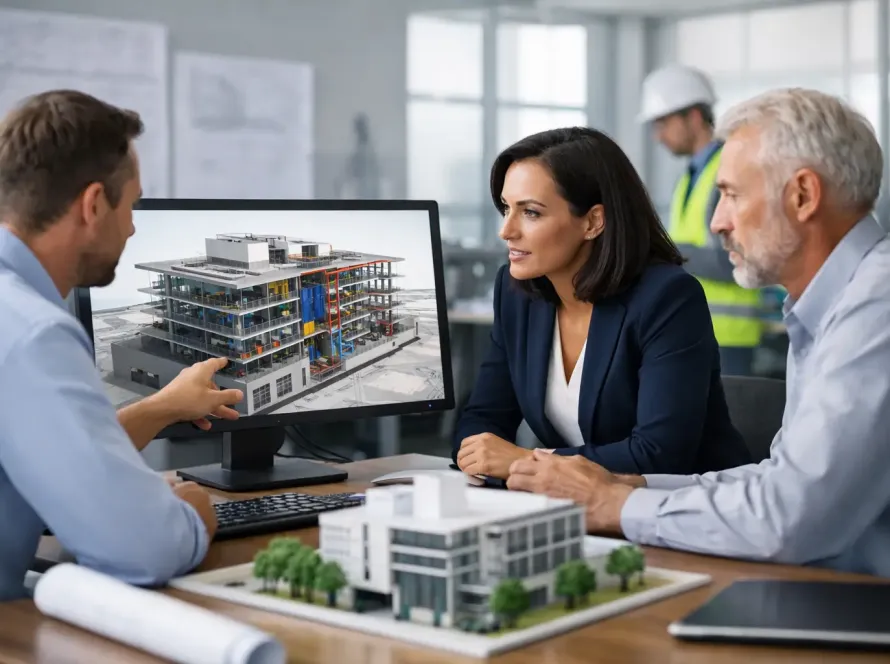
A crane swing path that conflicts with a scaffold line is not a field surprise anyone wants. Neither is a blind delivery route, a temporary works clash, or a trade crew walking into a space that looked clear on a 2D sheet but is congested in reality. That is where the real question matters: can BIM improve site safety? Yes – but not because a model is automatically safer than a drawing. BIM improves safety when teams use project data early, coordinate it often, and bring it all the way to the field.
For AEC teams already working in Revit, Civil 3D, Navisworks, Advanced Steel, or connected construction workflows, safety gains from BIM are less about hype and more about visibility. Better visibility changes decisions. It helps teams identify conflicts before mobilization, stage work more intelligently, and communicate risk in a format crews can actually understand.
Can BIM improve site safety in real project conditions?
It can, but the result depends on maturity. A federated model sitting on a server does not make a site safer by itself. The safety value shows up when BIM becomes part of preconstruction planning, coordination meetings, sequencing reviews, and field communication.
That distinction matters. Some firms claim BIM supports safety because it creates a 3D model. That is too shallow. The real advantage is that BIM can connect geometry, schedule logic, site logistics, temporary conditions, and issue tracking into one working environment. Once that happens, safety planning stops being a separate document set and starts becoming part of how the job is executed.
A superintendent looking at access routes, crane positions, laydown areas, and active trades in a coordinated model has a stronger basis for daily planning than one relying only on static plans. A BIM manager reviewing clash results can flag maintenance access, head clearance, egress conflicts, and install sequence risks before they become field hazards. An owner or project executive gains better visibility into where coordination gaps may create safety exposure later.
Where BIM delivers the biggest safety gains
The strongest safety improvements usually happen before work starts. Design-stage and preconstruction-stage decisions have an outsized impact on field risk, and BIM helps make those decisions with more context.
Hazard identification before mobilization
Many site hazards are predictable. Fall exposures, access bottlenecks, equipment path conflicts, excavation interfaces, and overhead coordination issues rarely appear out of nowhere. They show up when scope, sequencing, and site constraints are reviewed together.
BIM gives teams a way to test those conditions visually and spatially. That is especially useful on dense sites, renovation projects, hospitals, industrial facilities, and multitrade interiors where congestion increases risk. A coordinated model can reveal that a work area needs a different access path, that material staging creates pinch points, or that temporary edge protection must be planned earlier.
The practical value is simple: fewer assumptions. Safety risk grows when teams fill in missing information on the fly.
4D sequencing and safer work planning
Safety is heavily tied to timing. The same space can be low risk one week and high risk the next depending on who is working there, what equipment is active, and which systems are partially installed.
That is why 4D BIM can be especially effective. When schedule data is tied to model elements, teams can review construction sequences instead of just final states. This makes it easier to spot risky overlaps, such as structural steel activity above interior trades, equipment deliveries crossing pedestrian flow, or temporary works remaining in place longer than expected.
It also improves planning for high-risk transitions. Think topping out, enclosure phases, MEP rough-in congestion, or turnover in partially occupied buildings. Sequence visualization helps teams ask a better question: not just what will be built, but what conditions workers will face while it is being built.
Clearer communication in the field
Safety plans often fail at the handoff point. A hazard may be identified in a meeting, but by the time crews are on site, the message is diluted, buried in paperwork, or interpreted differently by each subcontractor.
BIM can reduce that gap. Visual communication is faster and clearer than text-heavy instruction alone, especially for complex areas. Site logistics views, trade-specific model slices, and visual phasing support better pre-task planning and toolbox talks. They also help multilingual teams align around the same conditions without relying only on verbal explanation.
For firms managing large files, distributed stakeholders, and multiple active revisions, the communication layer is just as important as the model itself. If teams cannot access current information quickly and securely, safety decisions slow down or happen from outdated data.
Can BIM improve site safety without changing site culture?
Not very much. Technology improves the quality of decisions, but culture determines whether those decisions are used.
A project can have strong modeling capability and still run unsafe operations if field leaders are not involved, if subcontractors are excluded from planning, or if model updates lag behind actual conditions. BIM is not a substitute for competent supervision, clear accountability, or disciplined safety management.
This is where many implementations fall short. The model is treated as a coordination deliverable rather than an operational system. Safety teams may be brought in late. Temporary works may not be modeled. Logistics may exist in disconnected files. When that happens, BIM supports presentation more than prevention.
The better approach is integrated. Safety planning should sit closer to coordination, scheduling, issue management, and field access to project intelligence. That gives teams a more current picture of what is changing and where risk is increasing.
The limits and trade-offs teams should understand
BIM can improve safety, but not every project sees the same return. There are trade-offs, and serious teams should be honest about them.
First, model quality matters. If geometry is incomplete, trade coordination is weak, or update cycles are inconsistent, teams may develop false confidence. A bad model can be worse than no model if people trust it too much.
Second, not every safety issue is model-friendly. Worker behavior, weather shifts, housekeeping failures, fatigue, and unplanned site conditions still require active field management. BIM helps with foresight, not total control.
Third, implementation takes effort. Modeling temporary works, maintaining logistics plans, and connecting field workflows require time, standards, and platform discipline. Some firms will not capture the full benefit if their systems are fragmented across too many tools and file locations.
That is why connected digital environments matter. Safety value compounds when BIM data, documents, communication, and project analytics are not scattered. A platform approach can help teams move from isolated model review to broader operational visibility, especially when coordination data needs to inform both technical users and business-side leaders.
What high-performing teams do differently
The firms getting real safety value from BIM usually share a few habits. They review logistics early, not after procurement is locked. They bring superintendents, trade partners, and safety leads into model-based planning instead of leaving it to design and VDC teams alone. They use visual workflows for field communication, not just office coordination. And they keep data current enough that crews can trust what they are seeing.
They also understand that safety is not a single feature. It is the output of better coordination, better timing, and better access to project intelligence. That is why ecosystems matter more than isolated tools. When modeling, collaboration, secure file sharing, analytics, and digital operational workflows work together, teams can respond faster and plan with more confidence.
For organizations looking to tighten that connection across BIM-centric workflows, BIMeta is built for exactly that kind of integrated project environment. Register Today and explore the platform at https://chat.bimeta.net/welcome.
So, can BIM improve site safety?
Yes – when it is used as an active planning and communication system, not just a model production process. It helps teams see hazards earlier, sequence work more intelligently, and align field execution with current project conditions. That does not eliminate risk, and it does not replace site leadership. What it does is reduce preventable uncertainty.
On complex projects, uncertainty is expensive. It slows crews, creates rework, and puts people in avoidable danger. The firms moving ahead are not asking whether digital coordination belongs in safety planning. They are asking how quickly they can make it part of standard operations. That is the better question to carry into your next jobsite review.